


The best 4-passenger electric golf cart is the one that meets the operating requirements of the property where it will be used. Before comparing manufacturers, buyers should define the daily route, passenger profile, terrain, and expected utilization.
A golf course typically needs a vehicle that protects turf, handles frequent stops, and provides comfortable transportation between holes. A resort may prioritize passenger comfort, luggage storage, quiet operation, and appearance. A residential community may require reliable transportation along paved paths, while a commercial campus may need predictable range and straightforward fleet maintenance.
| Application | Main purchasing priorities | Questions to ask |
|---|---|---|
| Golf courses | Turf-friendly tires, handling, braking, range | Will the vehicle operate mainly on grass or paved paths? |
| Resorts and hotels | Seating comfort, storage, lighting, appearance | Will guests carry luggage or travel after dark? |
| Residential communities | Maneuverability, reliability, safety | Are routes private, shared, or public? |
| Commercial campuses | Daily range, charging, serviceability | How many trips and operating hours are expected? |
| Large private properties | Ground clearance, traction, turning radius | Are there slopes, uneven paths, or gravel surfaces? |
The intended route should determine the specifications. A vehicle used on flat, paved paths may not need the same ground clearance or traction characteristics as one operating on uneven grounds. Buyers should also distinguish between private-property use and public-road use because registration, lighting, speed, and equipment requirements vary by jurisdiction.
A four-passenger electric golf cart is designed to carry a driver and three additional occupants, although the exact seating arrangement depends on the model. Capacity should be assessed alongside available legroom, seat dimensions, entry and exit access, and any cargo requirements.
Passenger count alone is not enough. Four adults with luggage create different space and loading demands from four golfers carrying small bags. Resorts transporting guests may need a dedicated luggage area, while residential users may prefer an unobstructed rear seat.
- Passenger capacity: Confirm the manufacturer’s rated seating capacity and applicable occupant restrictions.
- Payload capacity: Determine the permitted combined weight of passengers, luggage, and accessories.
- Seat layout: Evaluate seat belts, armrests, legroom, and ease of entry.
- Cargo requirements: Confirm whether rear storage is sufficient for golf equipment, groceries, or guest luggage.
- Vehicle dimensions: Check turning space, parking bays, storage buildings, and transport arrangements.
For buyers who frequently transport more than four people, comparing four-seat models with larger configurations can prevent costly fleet mismatches. DACHI also offers other configurations, including the DC-G-F4+2 golf cart, which buyers can evaluate against their passenger and cargo requirements.
Battery capacity and motor specifications are essential when comparing electric golf carts, but no single number describes the complete performance of a vehicle. Buyers should evaluate the battery, motor, controller, charger, and expected operating conditions as one system.
Voltage (V) describes the electrical potential of the battery system, while amp-hour capacity (Ah) indicates how much electrical charge the battery can deliver under specified conditions. Multiplying nominal voltage by amp-hour capacity provides an approximate nominal energy figure in watt-hours.
| Comparison factor | LiFePO4 lithium battery | Lead-acid battery |
|---|---|---|
| Maintenance | Typically requires less routine battery maintenance | Flooded types may require electrolyte-level checks |
| Weight | Generally lighter for comparable usable energy | Generally heavier for comparable usable energy |
| Charging | Depends on charger and battery management compatibility | Requires a suitable charging profile |
| Service life | Depends on chemistry, temperature, discharge, and charging | Depends on battery type, maintenance, and usage |
| Initial cost | Often higher | Often lower |
For additional safety context, the U.S. National Highway Traffic Safety Administration explains how battery management and temperature affect electric-vehicle battery operation in its electric and hybrid vehicle safety guidance.
The DC-G-F2+2 lists a 72V DC controller rated at 350A and a 6.3 kW AC motor. Its product specifications also state a maximum factory speed of 19 mph and a maximum gradeability of 30%.
The DC-G-F2+2 lists front and rear hydraulic disc brakes with an electronic parking brake. Its product page also lists a braking distance of 13 feet. Suspension includes front double A-arm independent suspension and a rear integrated axle with coil springs.
The ANSI/OPEI Z130.1-2020 standard addresses safety and performance specifications for golf cars intended for golf-course use.
| Specification | DACHI DC-G-F2+2 | Why it matters |
|---|---|---|
| Passenger capacity | 4 | Determines seating configuration |
| Battery | 72V, 105Ah LiFePO4 | Assesses technology and capacity |
| Motor | 6.3 kW AC motor | Indicates stated motor output |
| Driving range | ≥ 55.9 miles @ 19 mph | Reference for range discussions |
| Gradeability | 30% | Climbing performance reference |
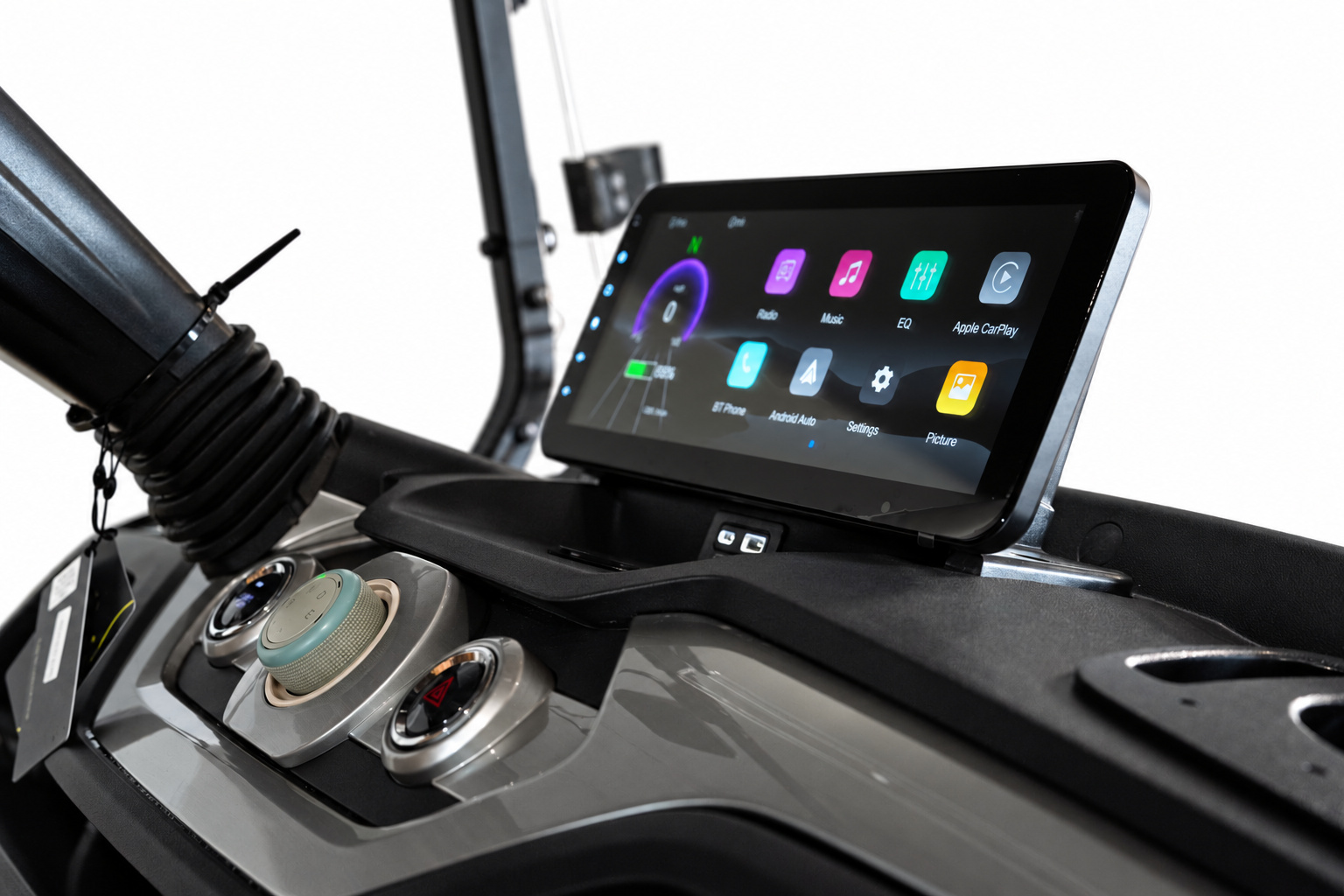
| Display | 12.3-inch touchscreen | Driver information/convenience |
The most economical electric golf cart is not necessarily the model with the lowest purchase price. Total cost of ownership (TCO) includes the expenses incurred throughout the expected operating life of the vehicle.
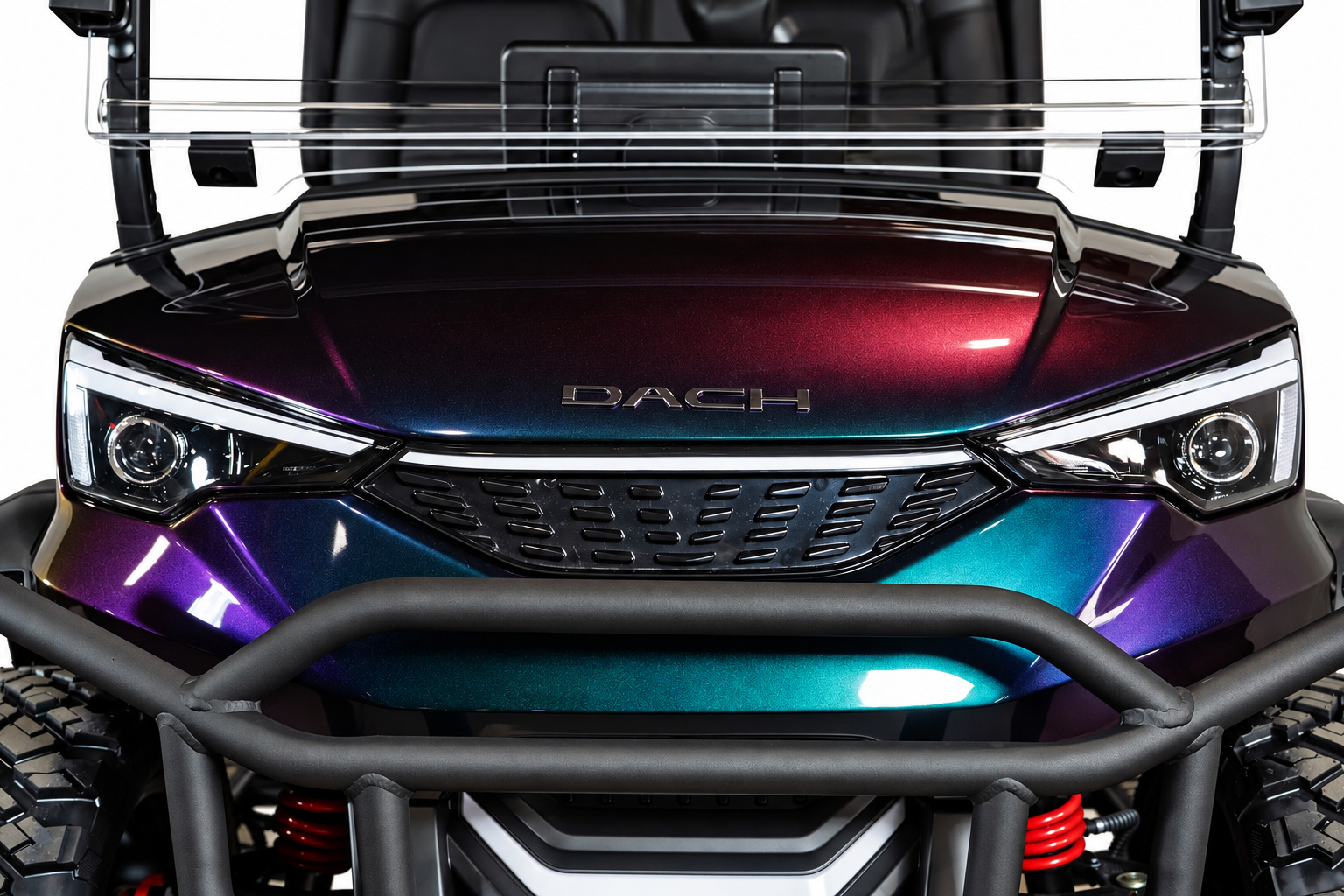
The DACHI DC-G-F2+2 is a four-passenger electric golf cart that may be worth evaluating for golf courses, resorts, and private communities. Its published specifications include a 72V 105Ah LiFePO4 battery, a 6.3 kW AC motor, and a 12.3-inch multimedia touchscreen.
Buyers who need a different passenger configuration can also compare the DACHI DC-G-F4 model and DC-G-F4+2 model.
Post time: Oct-26-2026